A lead who requested a quote and then went quiet is not a lost sale. In most trades, “didn’t buy” means the money left the category — the shopper found a substitute or dropped the purchase altogether. A move is different. Somebody who filled out a quote form has a home changing hands, a lease ending, a job starting somewhere else. That event does not cancel itself because they picked a different mover, delayed the decision, or got busy. The move is still happening. The only question left is whether you are still in the room when it does.
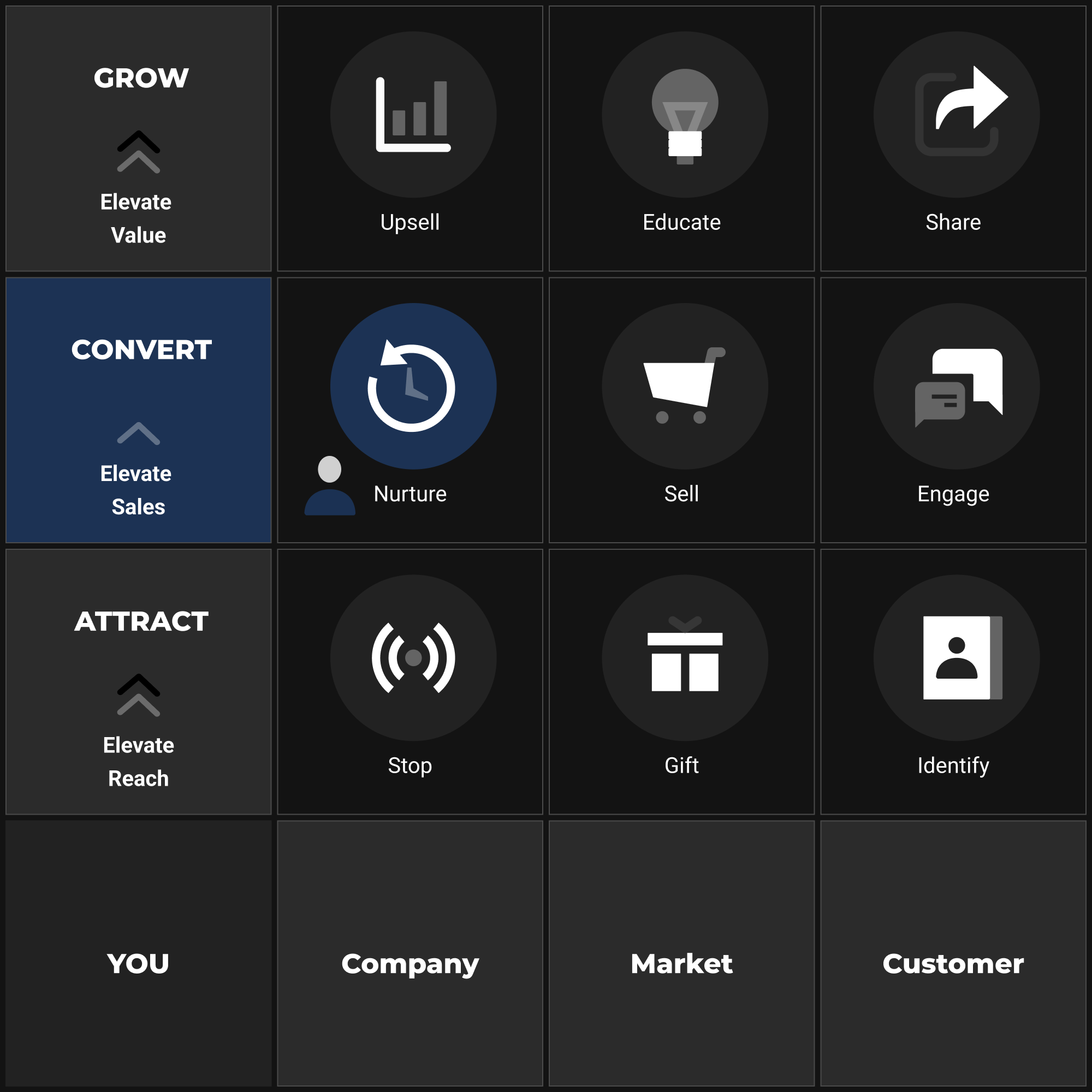
This is Stage 6 — the CONVERT stage that runs quietly while ATTRACT and the earlier CONVERT steps get the attention. A lead who requests a quote and doesn’t book is not deleted from your pipeline; they are parked. NURTURE is the discipline of checking back on that parked lead once, at the right moment, with the right message — then either welcoming them back into the active sale or letting them rest until something real wakes them up.
”Lost” Is a Status, Not a Verdict
Every quote funnel produces leads who don’t book on the first pass. The instinct is to write them off and chase fresh leads instead. That instinct is expensive, because a mover-specific truth works against it: moving is infrequent, high-consideration, and time-bound. Someone who requested a quote had a real reason to move and a real date attached to it. If they didn’t book with you, one of three things is almost always true — they booked a competitor, they’re still shopping, or the move slipped. None of those means the household stopped needing a mover. It means your information about when and with whom is out of date.
Treat the stalled quote as a stage with its own goal, not a dead end: recover what can be recovered, and let the rest go dormant on a timer rather than disappear. Keep the target modest — expect a minority of parked leads to re-engage, not a majority. Set your recovery target from your own pipeline history; a number borrowed from someone else’s book of business will only mislead your planning.
The Day-30 Principle: Re-Engage on Value, Never on Price
The most damaging mistake in re-nurture is reaching for a discount. It feels intuitive — “they didn’t book at that price, so offer a lower one” — and it is exactly the wrong move in this trade. An estimate that suddenly drops after 30 days tells the household one of two things, both bad: the first number was padded for negotiation room, or the new number is a bait cut that will balloon back on move day through added fees. Either read damages the thing a moving company depends on most — trust that the number in writing is the number that gets paid. A discount doesn’t just cost margin; it plants a doubt the customer will carry to move day, where doubt turns into a dispute over the bill.
Re-engage on value instead: a genuinely useful moving-day tip, a packing checklist, a seasonal reminder (“still on for your [month] move?”), or a piece of proof that reduces uncertainty — a license lookup, a review count, a plain explanation of what a binding or not-to-exceed estimate protects them from. The message should read like a competent professional checking in, not a salesperson circling back with a coupon.
What Triggers the Touch, and How It’s Sequenced
The trigger is time plus status: a lead sits in “quote requested, not booked” for a set window — 30 days is a common default — with no newer activity. Before the message goes out, run one guard: has the move date already passed? If so, this isn’t a re-nurture case (more below). If the date is still live, send one message built around the reason the lead stalled — price uncertainty, comparing another carrier, or not ready to commit to a date. Each reason gets its own angle; a generic “just checking in” wastes the one touch you get.
If there’s no response, send one short follow-up a couple of days later, then stop. The discipline is one proof-built message plus one follow-up — never an ongoing drip. A household planning a move is not a casual browser who needs twelve reminders; they are actively deciding, on a real deadline, and a message that respects that earns more trust than one that nags.
Back Into Sell, or Still Resting in Nurture
A reply or a click on the re-nurture message means the lead moves back into Stage 5, SELL — re-entering the quote-to-booking conversation at the point where the household already knows who you are. They don’t need to be re-sold on your existence; they need the next practical step, usually a fresh or confirmed estimate.
Silence is not failure — it’s information. A lead who doesn’t respond to the day-30 touch goes dormant, not back into the sequence. Tag them for a longer rest and let the connection cool until something real — a seasonal push, a new listing on their street, a direct reply months later — re-warms it. Chasing a cold lead too hard just trains them to ignore you faster.
When the Move Date Has Already Passed
If the guard finds the move date behind them, the re-nurture message doesn’t apply — “book your move” copy aimed at someone who already moved reads as careless, not helpful. Pivot: ask how the move went, offer to help with the next one whenever it comes, and — gently — ask if they’d refer a friend or leave a review if the experience was good. A household that moved without you is still future business: a repeat customer years down the line, or a referral that costs nothing to earn if you ask at the right moment.
AI Earns Its Place Here
Drafting the day-30 message is exactly the kind of work AI accelerates, provided you feed it real inputs. Give the model your business profile — service area, licensing, review count, what your estimate guarantees — plus the stall reason for that lead (price, competitor, timing, or not-ready). Ask for one tight message built on proof, not pressure, and one short follow-up variant. Then apply the judgment a model can’t: check that nothing in the draft implies a discount, confirm the tone is a professional checking in rather than a salesperson chasing a close, and verify every factual claim — license status, review count, service area — against what’s true today. The model can produce the draft fast; only you can vouch that it’s honest.