Every moving company’s website makes the same offer above the fold: “Get a Free Quote.” It is the trade’s default gift, handed out so many times, in so many identical forms, that it has stopped feeling like a gift at all. A number typed into a box in exchange for a name and a phone number — and the customer knows, before they submit, that a salesperson will call within the hour with a price that has little to do with what shows up on moving day.
That is the graveyard this trade built for itself. Not a graveyard of unread PDFs, like some industries — a graveyard of quotes nobody trusts. The instant-quote form is everywhere and it has taught every prospect the same lesson: the number on the screen is not the number you will pay.
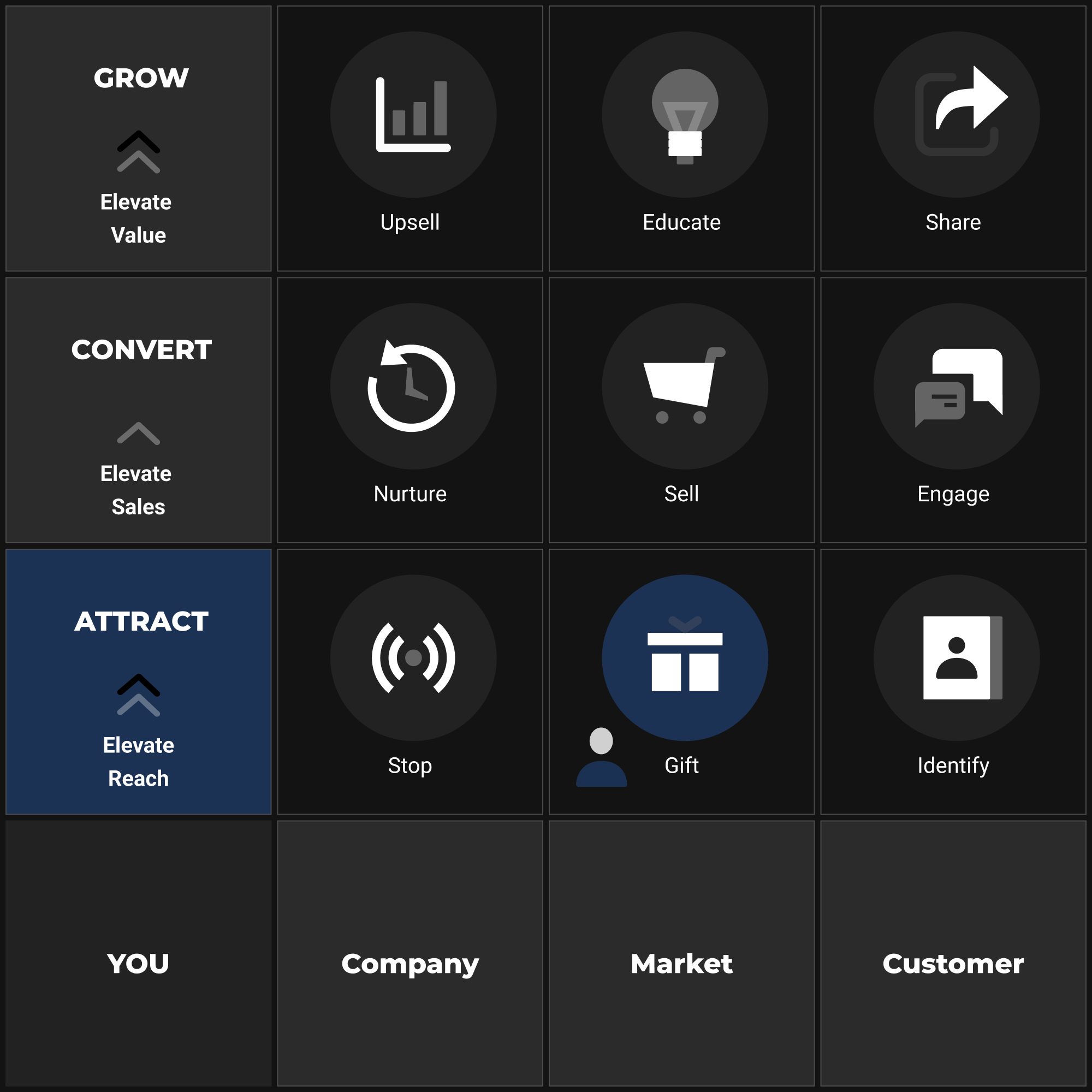
This is the gap Stage 2 of ATTRACT closes. Not “get a quote” — give the thing that kills the fear a quote form cannot touch.
The HOOK Was About the Fear. The GIFT Removes It.
If your HOOK did its job, it named the thing every moving prospect is quietly afraid of: getting hostage-loaded — the truck packed, the crew standing in the driveway, and a “final” number that has doubled from the phone estimate. That fear does not come from nowhere. It is one of the trade’s most common complaints, and every prospect scrolling your ad has heard the story from a friend, a neighbor, or a review thread.
A hook that names that fear and then hands the prospect a generic instant-quote box has broken its own promise in the first three seconds. The prospect came in afraid of an unreliable number. A form that spits out an unreliable number — a range, a ballpark, a “starting at” figure with no crew attached to it — is not a gift. It is the exact thing they were afraid of, wearing a nicer font.
The gift that matches the hook is the free 15-minute video-estimate call. A real person, live on video, walks your rooms with you, sees what’s actually being moved, and gives you a number on camera — binding or not-to-exceed, in writing, before you’ve committed to anything. It costs the prospect fifteen minutes and a phone. It costs you nothing to offer and very little to deliver. And it is the single lead magnet in this trade that removes the #1 objection (I don’t trust the number) instead of restating it.
Why “Deliver First” Works Especially Well Here
Every trade benefits from reciprocity — give something real before you ask for anything back. But moving has a sharper reason this works: the entire sale is a trust problem before it is a price problem.
Nobody hires a mover because the price is the lowest number they’ve seen. They hire the mover who feels least likely to lie to them. A video-estimate call proves that in a way no ad copy can: the prospect sees a real, licensed person, in a real uniform or a real office, giving a real number to their real rooms, on camera, before any money changes hands. That is evidence, not a claim. Anyone can write “honest, transparent pricing” on a landing page. Showing up on video and doing exactly that is the only way to prove it.
This also explains why the free call converts prospects a discount code never will. A 10%-off voucher attracts whoever is cheapest that week. A video-estimate call attracts someone who has an actual move happening, an actual date, an actual set of rooms — because nobody schedules fifteen minutes of their week for a fake problem. The gift is self-qualifying. Wanting it tells you something true about the person who asked.
The Second Gift: the “Know Your Rights Before You Sign” Checklist
Not every prospect is ready to get on a video call the first time they land on your page. A parallel, lower-commitment gift catches that segment: a short, plain-language checklist of the questions any consumer should ask a mover before signing an estimate.
A good version covers, in the prospect’s language, not the industry’s:
- Is this a binding or non-binding estimate — and does the company say so in writing?
- What is the deposit policy — how much, refundable under what conditions, due when?
- Is the company licensed for the move type (interstate registration where required; the relevant state authority for in-state moves) — and can they show the number?
- What happens if the truck is delayed, or the move runs longer than quoted?
- Who is liable if something breaks — released value or full value protection, and what does each actually cost?
This checklist does double duty. It is genuinely useful on its own — a prospect who reads it becomes a better prospect, one who knows what a legitimate estimate should look like and is primed to recognize your video call as the real thing when it arrives. And it costs almost nothing to produce: a single page, six or seven questions, no design budget required. Comprehensive without padding — one page, one sitting, done.
Designing the Opt-In Page
The page this gift lives on should do one job and nothing else — offer the call, remove the friction, get the six fields, done.
Headline — name the outcome, not the mechanism: “See Your Real Moving Cost — On Video, Before You Book.” Not “Schedule a Consultation.” Not “Get Started Today.” The prospect needs to know, in one line, that this ends the not-knowing.
Three benefit bullets, each answering a fear the hook already raised:
- A fixed number, not a guess — you’ll hear binding or not-to-exceed pricing on the call itself, in writing after.
- No truck shows up first — you see the estimate before any crew, any date, any deposit.
- 15 minutes, from your phone — walk your rooms on video; no one needs to visit your home.
CTA — one button: “Book My Free Video Estimate.” No second offer competing on the same page. No “or call us” buried three links deep — a phone number is fine as a secondary option, but there is exactly one primary path.
The form beneath the CTA stays to the six fields the trade actually needs to route the lead: name, phone, move date, from-zip, to-zip, home size. Six fields, never fifteen — every extra field is friction between the prospect and the thing that already earned their trust.
Message Match: The Gift Must Finish the Hook’s Sentence
If the hook named hostage-loading fear, the gift is not “a free consultation.” It is specifically the thing that visibly, on camera, removes that fear — a live walkthrough ending in a fixed number, spoken and then written down. Anything looser than that — a “quick chat,” a “no-obligation call,” a vague “let’s talk about your move” — reopens the same trust gap the hook just closed. The prospect clicked because you named their fear precisely. The gift keeps that promise by being precise back: same fear, same specificity, now answered instead of restated.
Anonymization note: whatever real numbers you have from your own operation — an actual opt-in rate, an actual response time, an actual review count — belong in your own internal Gift Worksheet, never presented in training material or shared playbooks as if they were the trade’s universal benchmark. One company’s 22% opt-in rate on warm retargeting traffic says nothing reliable about another company’s cold-social funnel in a different metro. Use placeholders ({{ opt_in_rate }}, {{ response_time }}) when documenting the pattern for reuse, and keep the real figures where they belong — in your own dashboard.
AI Earns Its Place Here
The strategic decisions are already made — video call as the primary gift, checklist as the secondary one, message match to the hook’s specific fear. What’s left is drafting, and drafting is where AI is fast.
Feed the model your business profile: your licensing details, your service area, your named crew or owner, your actual estimate policy (binding, not-to-exceed, deposit terms), and the specific fear your hook named. Ask for three headline variants, three bullet sets, and a short delivery-email draft for after someone books the call — all built around the video-estimate offer, never a generic “get a quote” frame.
Then edit hard. Cut anything that sounds like the instant-quote box you’re trying to differentiate from. Cut any claim you can’t back with your actual license numbers or actual policy. Sharpen every bullet until it answers a fear a real prospect carries — not one borrowed from an ecommerce template. A model’s first draft of moving-company copy drifts toward generic “stress-free moving” language; push it back toward the specific, checkable claims — the license number, the binding-or-not-to-exceed line, the real crew — the only things this trade’s prospects have learned to trust.